The Big Lebowski is the 7th film written, produced and directed by the Coen Brothers. The script was written in the early '90s around the time they released Barton Fink. In the meantime, they wrote, produced and directed the box office bomb, The Hudsucker Proxy, as well as the critically acclaimed and Oscar award-winning, Fargo. They waited as long as they needed to get Jeff Bridges and John Goodman in the cast and it paid off big time.
Synopsis
In Los Angeles, 1991, a mysterious man (Sam Elliot) introduces us to the lazy hero of this story, Jeff "The Dude" Lebowski (Jeff Bridges). The Dude walks into his apartment and is attacked by two thugs, mistaking him for the millionaire Jeff Lebowski, whose wife, Bunny, owes money to pornographer Jackie Treehorn. Before they leave, one of them urinates on The Dude's rug. The next day, he tells the story to his bowling team, hard-nosed Vietnam veteran Walter Sobchak (John Goodman) and good-hearted Donny Kerabatsos (Steve Buscemi). The Dude visits the Lebowski mansion and he's greeted by his cheery assistant, Brandt (Philip Seymour Hoffman). He meets with millionaire Jeffery Lebowski (David Huddleston), a wheelchair-bound philanthropist, seeking compensation for his soiled rug. Lebowski denies his request for a rug and The Dude leaves his office. He tells Brandt he can take any rug in the house. On his way out, he meets Bunny (Tara Reid), Lebowski's trophy wife.

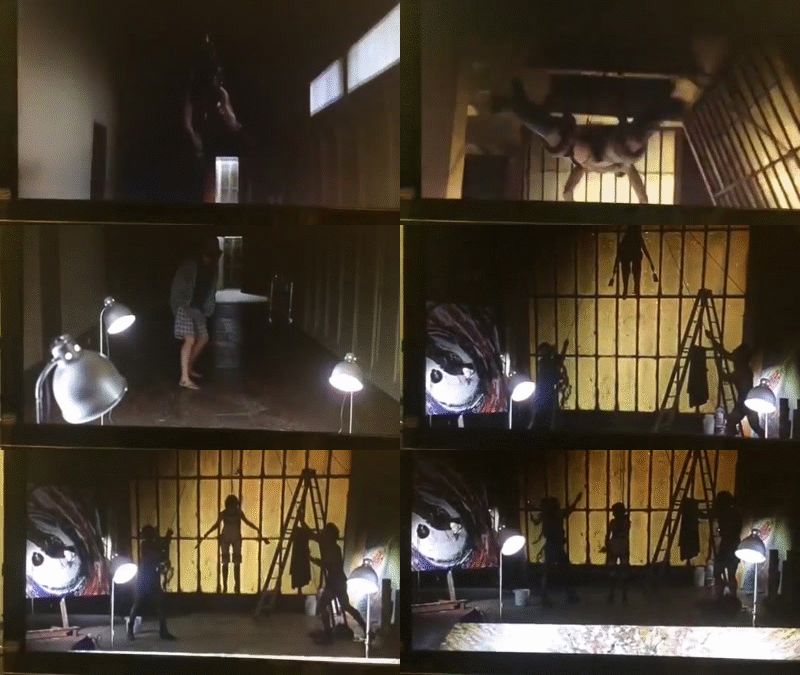 Police question The Dude about the stolen car when Lebowski's daughter, Maude (Julianne Moore), calls him, revealing she took her rug back and sends a car to pick him up. He is brought to Maude's abstract art studio, where she's swinging around nude, throwing paint at a canvas. She shows him a video of Bunny acting in one of Treehorn's porno films. Maude assumes Bunny staged her kidnapping. Maude noticed the $1 million withdrawal from one of the Lebowski charity programs for the ransom. She gives The Dude the number of a doctor who will give him a free examination.
 The Dude is given a limo back to his apartment and the driver shoves him into another limo with Brandt and Lebowski. Lebowski is furious that the ransom money wasn't delivered, accusing him of stealing the money and shows him a severed toe he thinks belongs to Bunny. That night, three German nihilists break into The Dude's apartment, threatening him to get the ransom money. His car was found by police but the briefcase is gone. He finds a piece of homework in the seat with the name Larry Sellers on it. The Dude and Walter go to his house, but the teenager refuses to speak. Walter takes a tire iron and smashes the Corvette outside of their house. The neighbor and owner of the Corvette runs outside and smashes The Dude's car with the tire iron.
 Treehorn's thugs return and bring The Dude to Jackie Treehorn (Ben Gazzara). He asks about Bunny and the money. He drugs The Dude's white Russian that brings him to a surrealistic fantasy titled, Gutterballs, where he dreams of Maude and bowling. The ending turns into a nightmare as he's chased by red men with giant scissors. He wakes up, running down the middle of the street. He's picked up by the police and told to stay out of Malibu. His taxi driver throws him out of the car for hating on The Eagles. Bunny driving a red convertible passes him, she still has all of her toes.
He walks home to find his place trashed. He trips and Maude stands above him in his robe, wanting him to make love to her. Afterward, Maude reveals her father has no money, having given it all to charity. Maude gets into a position she believes will increase the chances of conception. She assures him that he will have no involvement with her or the child. That's why she had him see a doctor.
The Dude finds a private investigator outside looking for Bunny. He reveals Bunny's real name is Fawn and she ran away from home a year ago. He's picked up by Walter and tells him there was no money in the briefcase and Lebowski wanted Bunny dead all along. They drive to Lebowski's to find Bunny's car crashed into a fountain. Brandt tells them Bunny went to visit friends in Palm Springs without telling anyone. Walter throws Lebowski out of his wheelchair and realizes he wasn't faking his paralysis.
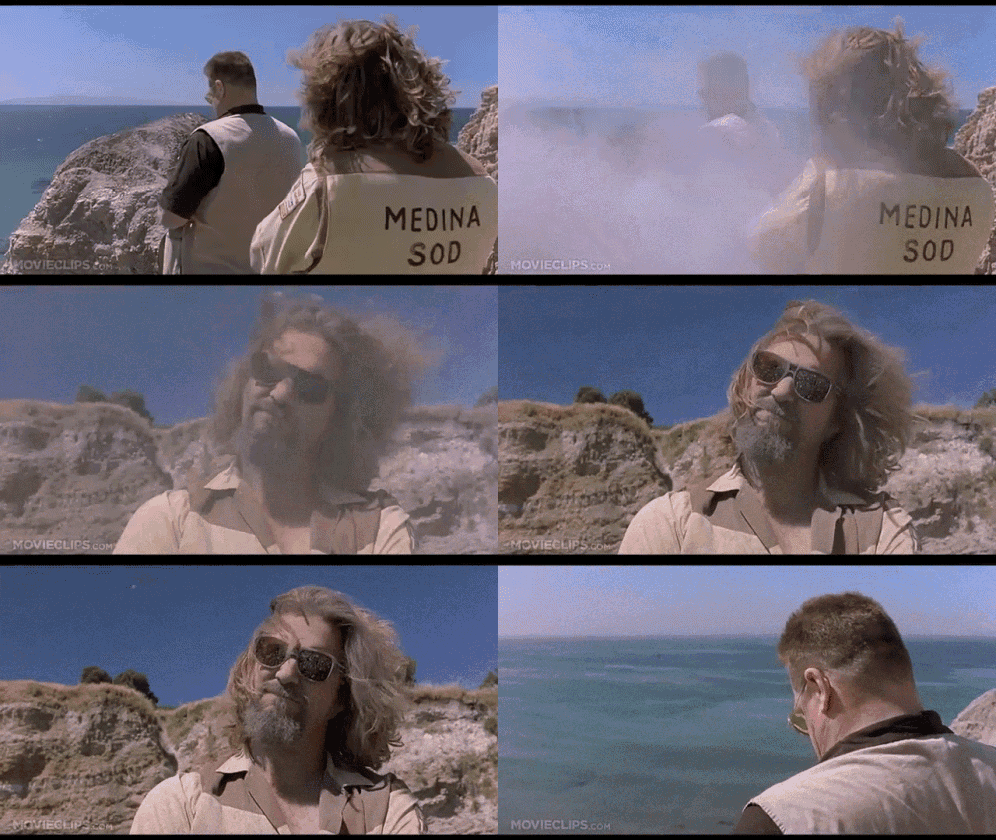 Back at the bowling alley, they walk outside to find The Dude's car on fire. The three German nihilists demand ransom money. The Dude tells them there was no money or hostage. Walter throws his bowling ball at one of them, bites one of their ears off and beats the last one with their radio. Donny suffers from a heart attack and dies. The Dude and Walter refuse to buy an urn at the morgue so they settle with a coffee can to hold his ashes. On the Pacific coast, Walter gives his eulogy and spreads the ashes. The wind blows the ashes all over The Dude. He's angry at first then Walter suggests they go bowling. The mysterious man reveals there's a Little Dude on the way and wishes them luck in their bowling tournament.
Review
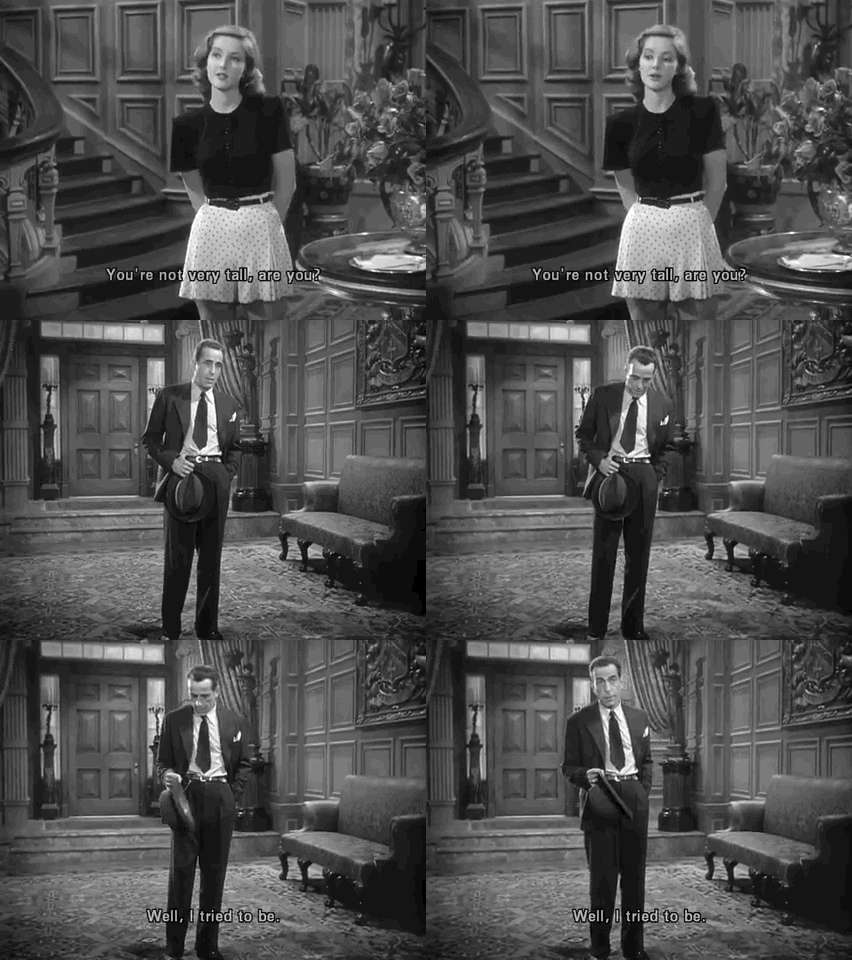
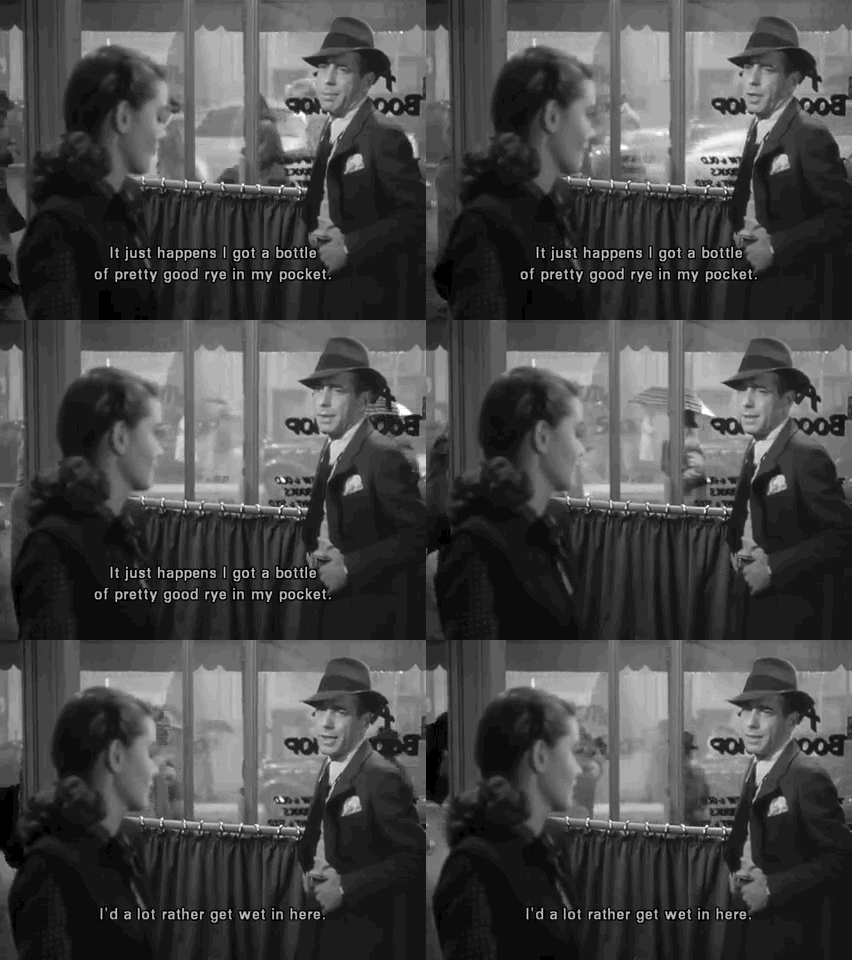
The Big Lebowski is difficult to discuss without revealing certain aspects of the film, which is why I included a shortened synopsis. To read the full synopsis, click here. Similar to The Big Sleep, The Big Lebowski takes a convoluted plot to extreme measures. Both films include a wealthy, handicapped millionaire, promiscuous young women, blackmailers and pornographers. Both films make us connect characters to one another and piece together a scattered plot.
 Taking a large step back from everything that happens in The Big Lebowski, the story is essentially about nothing. There is no money in the briefcase. There is no hostage. The nihilists believe in nothing except money. The Dude is not seen bowling. The Dude has no job and we don't know how he makes an income. Walter uses Shomer Shabbos as an excuse to do nothing on Saturday even though he's no longer Jewish. The only reason The Dude gets involved with Lebowski is due to his rug and agrees to work with him for just a small portion of the ransom. From the beginning, The Dude, Walter and Maude assume that Bunny kidnapped herself to extort money from Lebowski.
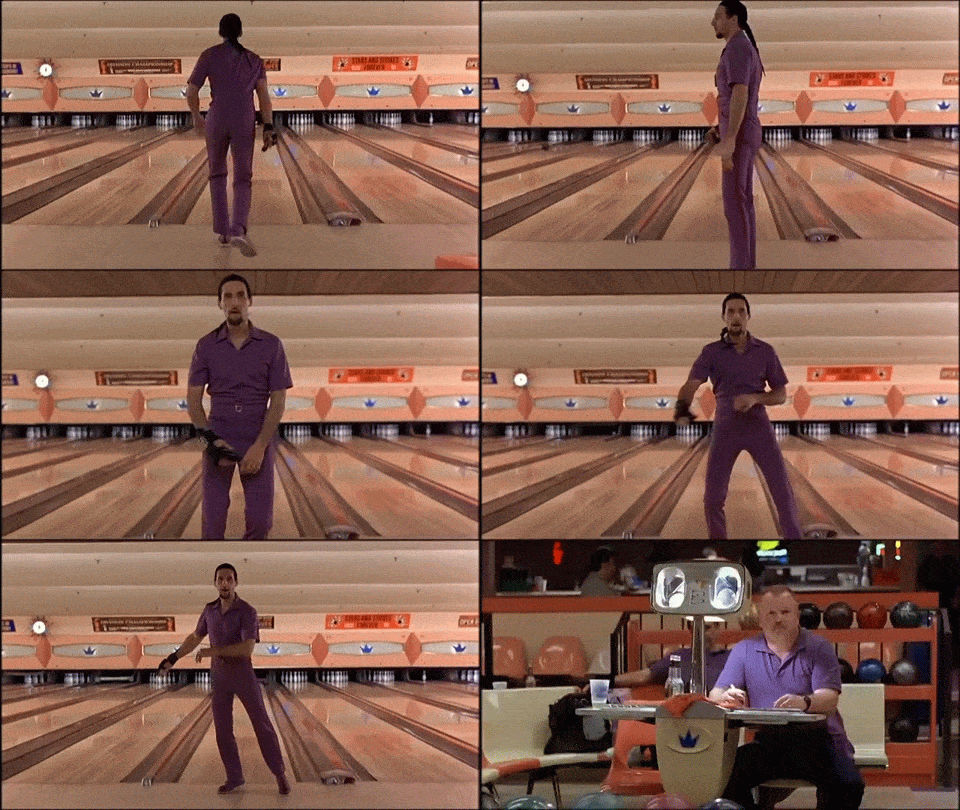 The bowling alley is the safe haven for The Dude and his team. Walter takes the bowling league very seriously. He threatens a bowler with a gun for stepping over the line and gets him to mark zero on his scorecard. When bowling rival Jesus Quintana (John Turturro) confronts the team, Walter reminds them he's a sex offender that exposed himself to an eight-year-old. Throughout the story, The Dude shares his news to Walter and Donny at the bowling alley. The mysterious man most likely overhears their conversations which is why he can narrate The Dude's story. He's seen talking to The Dude at the bowling alley's bar and appears again at the end. He never introduces himself, but Sam Elliot's resonant accent and thick mustache make his character memorable.
The script is very funny and explicit. The Dude and Walter's dialogue often clash but it doesn't get in the way of their friendship. The script was written specifically for Jeff Bridges and John Goodman's characters. Jeff Bridges is perfectly cast as The Dude, he's often misunderstood and spacing out in his own world. Unlike previous Coen Brothers films with Steve Buscemi, Donny can barely get a word out before Walter tells him to shut up. Julianne Moore puts on an interesting accent as Maude, that isn't distinct to any one place. Maude's giggly assistant, abstract artwork and sexual nature make her one of the funniest characters in the film. She's the centerpiece of the Gutterballs dream sequence as a sexy Viking surrounded by bowling pin dancers.
The soundtrack is great and it's referenced throughout the film. The Dude and Walter are listening to Creedence Clearwater Revival's "Run Through the Jungle" when delivering the briefcase. The cops who look for the car are worried the tape deck with Creedence would be stolen and are relieved when they find it still there. The song used in the opening credits, "The Man in Me" by Bob Dylan is used again when Maude knocks out The Dude and takes back the rug. They play the Rolling Stones song "Dead Flowers" by Townes Van Zandt after Donny's death.
The directing by Coen Brothers is very well done. Many of the cast members are reoccurring from previous films they've directed. The film's structure was influenced by detective fiction writer Raymond Chandler. The cinematography by Roger Deakins made the scenes look contemporary with the time period and the dream sequences to look bizarre. Deakins worked on previous Coen Brothers films such as Barton Fink and Fargo, as well as The Shawshank Redemption. The editing is impressive, especially during the dream sequences. The first-person camera shot inside the bowling ball as it rolls down the lane for a strike looks very sharp. They use pan and zoom shots frequently to go from a wide view of the setting to the subjects. They use long takes, the most impressive coming in the final scene, that finishes with a strike.

4/4
Supplements:
The Making of The Big Lebowski